 En
 中文

What are the development trends of the automotive parts and accessories manufacturing industry?
The core of automotive component and accessory manufacturing lies in achieving a balance between meeting safety and reliability requirements and standardization, high precision production, and cost control.
1. Core Quality and Safety Management
This is the primary prerequisite for component manufacturing, directly affecting the safety of the entire vehicle and the lives and property of users.
Material compliance: Only raw materials that meet industry standards (such as ISO, ASTM) can be used. Some key components (such as engine parts, safety airbag components) must have characteristics such as high temperature resistance, fatigue resistance, and high strength.
Strict inspection process: From raw material entry inspection (IQC), to the first article inspection (FAI) during the production process, process inspection (IPQC), to the final product inspection (OQC), the inspection of dimensions, performance, and appearance needs to cover all dimensions.
Failure Mode Analysis (FMEA): Identify potential failure risks during production and use in advance, formulate preventive measures, and reduce the probability of component failure.
2. High Precision Production and Process Control
Automotive components have extremely high requirements for dimensional accuracy and consistency, which need to be achieved through process optimization and equipment support.
Standardized production process: Based on TS 16949 (quality management system for the automotive industry), formulate SOP (standard operating procedures) to ensure the uniform quality of each batch.
Application of automated equipment: Key processes (such as precision machining, welding, painting) need to introduce CNC machines, robots, etc. to reduce human error and improve production efficiency.
Process parameter monitoring: Real-time monitoring and recording of key process parameters (such as temperature, pressure, speed) to ensure the stability of the production process and avoid quality problems caused by parameter fluctuations.
3. Cost and Supply Chain Management
While ensuring quality, reasonable cost control is the key to an enterprise's competitiveness. Supply chain collaboration: Establish long-term cooperation with raw material suppliers and logistics providers to ensure stable supply of raw materials and reduce procurement costs through centralized purchasing.
Lean Production: Eliminate waste in production (such as inventory accumulation, redundant processes), optimize production rhythm, improve resource utilization, and reduce unit production costs.
Mass production: For common components (such as bolts, filters), expand production scale to spread fixed costs and achieve cost advantages.
4. Compliance and Industry Standards
The manufacturing of components must strictly comply with the regulations and requirements of various countries and regions to avoid compliance risks.
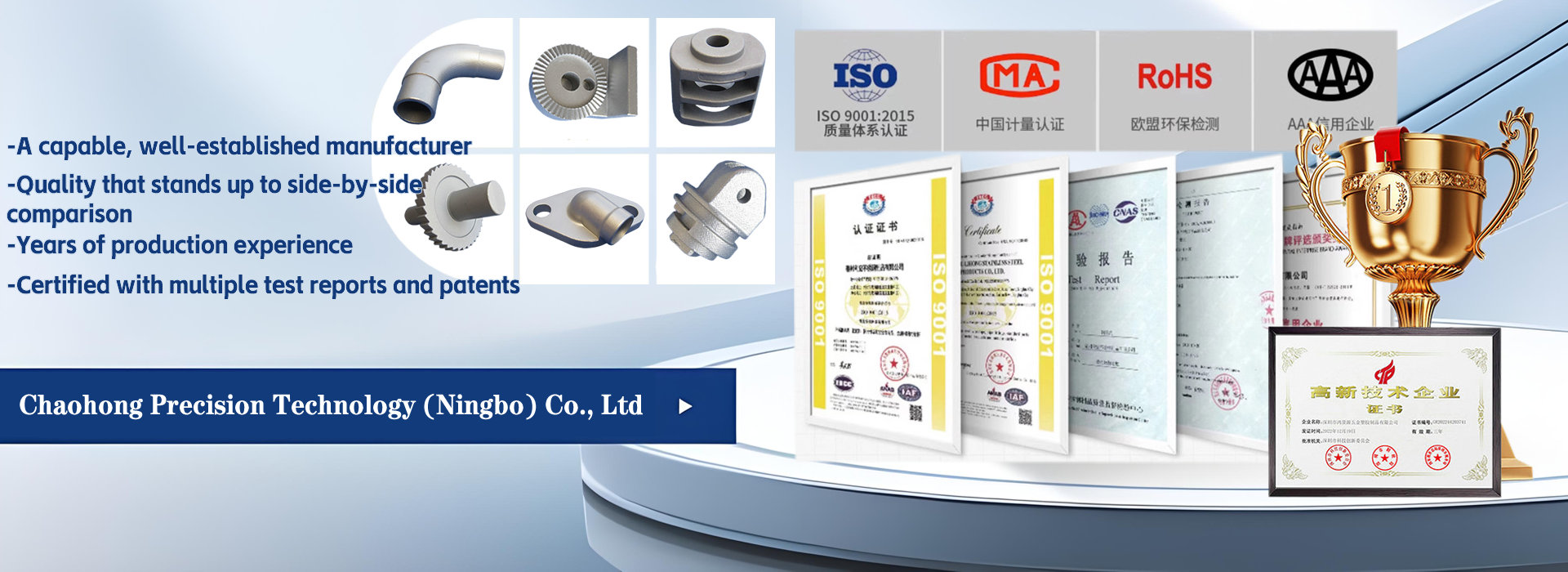
Industry certifications: The products must obtain relevant certifications, such as the CCC certification in China, the E-Mark certification in Europe, and the DOT certification in the United States, to ensure compliance with local market entry standards.
Environmental protection requirements: The production process must comply with environmental regulations, such as wastewater and waste gas emission standards. Additionally, some components (such as electronic components) must meet the RoHS (Restriction of Hazardous Substances) directive.
The automotive component and accessory manufacturing industry is in a period of rapid transformation, presenting trends such as electrification, intelligence, and lightweighting. Here is a detailed introduction:
Electrification continues to deepen: The penetration rate of new energy vehicles is continuously increasing, expected to reach 40% by 2030, which will drive the continuous growth of demand for components such as batteries, electric drive systems, etc. In 2024, the market size of components for the three-electric systems (motors, electronic control, batteries) in the automotive component and accessory manufacturing industry in China exceeded 28 billion yuan, with a year-on-year growth of over 25%, and it is expected that this related market will continue to grow at a high speed in 2025.
The trend of intelligence is obvious: The development of intelligent connected vehicles prompts a significant increase in the demand for key components such as sensors, on-board computing platforms, and high-precision maps. In 2025, the market size of components related to the intelligent connected vehicle field is expected to exceed 15 billion yuan. Component manufacturers need to continuously improve their technical levels to meet the demands of intelligent development.
Lightweighting becomes an important direction: To improve vehicle energy efficiency and meet emission reduction targets, the application of lightweight materials such as carbon fiber composite materials, high-strength steel, and aluminum-magnesium alloys will become more widespread. The use of lightweight materials can not only reduce vehicle weight but also improve vehicle performance and range.
Globalization strategy accelerates: With the deepening implementation of the "Belt and Road" initiative, Chinese automotive component enterprises have accelerated their overseas expansion. In 2024, the export volume of automotive components and accessories manufacturing in China reached 31 billion yuan, increasing by 14.2% year-on-year. The main export markets include Southeast Asia, Europe, North America, and the Middle East. It is expected that the export volume will reach 35.5 billion yuan in 2025, increasing by 14.5% year-on-year.
Growing demand for after-sales services: The increase in the number of vehicles beyond the warranty period has driven the demand for the independent aftermarket (AM). In 2025, it is estimated that there will be over 200 million vehicles beyond the warranty period in China, which will bring broad development space to the automotive component after-sales market. At the same time, digital platforms will integrate scattered repair channels to improve the efficiency and service quality of the after-sales market.
Accelerated digital transformation: The application of digital technologies such as the Internet of Things, artificial intelligence, and robotics in automotive component manufacturing will continue to deepen, which will help improve production efficiency, product quality, and the competitiveness of enterprises. Through digital transformation, enterprises can achieve intelligent monitoring and optimization of the production process and reduce production costs.